

This is a concern that every provider of anti-wrinkle injections hears from the occasional patient. It feels real to the patient, but in most cases the eyelid itself has not changed. Here is what is going on.
True eyelid droop (ptosis)
True ptosis is a rare complication. It happens when the muscle-relaxing medicine spreads into the muscle that raises the upper eyelid (the levator palpebrae superioris, shown in figure 1). That muscle is weakened and the lid cannot open fully. It can be partial or complete, and it lasts until the effect wears off, which can take weeks to months. It is usually associated with injections placed in the wrong area or at too high a dose, and is why technique matters so much.
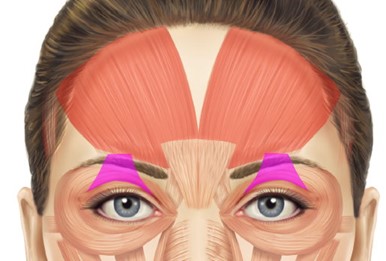
Figure 1. True upper lid ptosis can occur if the medicine reaches the levator muscle (shown in purple).
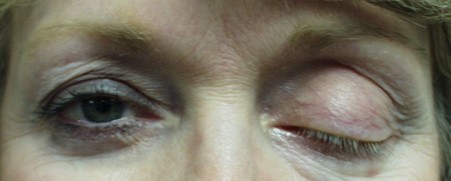
Figure 2. A patient with true ptosis from levator weakness, which is a rare complication.
Brow heaviness: what patients usually mean
Several muscles pull the eyebrows down, and they are commonly treated to soften frown lines. Only one muscle raises the brows, the frontalis (figure 3). That is where the usual confusion starts.
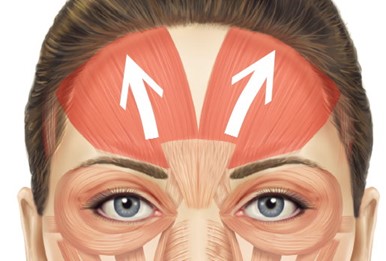
Figure 3. The frontalis muscles (red) are the only muscles that lift the brow.
As the upper eyelid skin loosens with age, many people, especially women from their mid-forties, raise their brows all day without noticing, to keep the skin lifted off the eyelid. This can make the eyes look younger and help vision, but it also deepens horizontal forehead lines.
If the frontalis is treated, or treated nearby, it may no longer lift the brows. In someone with loose upper eyelid skin, the skin then bunches and the eyes look heavier (figures 4 and 5). What patients describe as a drooping eyelid is usually this loss of brow lift, not true ptosis.
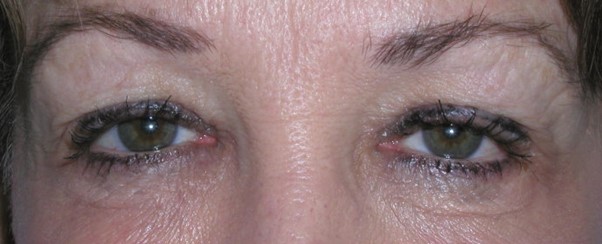
Figure 4. A patient set up for brow heaviness: excess upper lid skin, compensated by raising the brows.
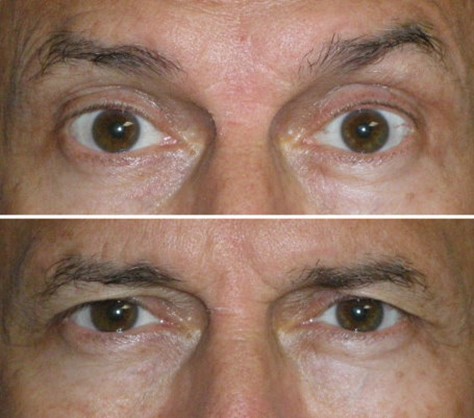
Figure 5. With the brows raised (top) the eyelid looks better. With the brow relaxed, the skin looks more excessive.
What can be done
- Plan treatment around your anatomy. Treatment of the forehead can be customised to preserve some lifting movement of the brow
- Leave the forehead untreated if you rely on it to lift loose eyelid skin
- Consider surgery. If excess upper eyelid skin is the real issue, an eyelid operation (blepharoplasty) addresses the cause
- Review after the first treatment. Sensitivity varies, and the second treatment can often be planned more precisely
An experienced doctor will spot this during the consultation, explain the possibility, and adapt the plan. This is simply anatomy: it is neither the patient’s fault nor, necessarily, the doctor’s. But it is much more likely to be avoided with careful assessment and an experienced, qualified practitioner.
To talk it through, book a free 30-minute consultation with Dr Azoo at the clinic in Ealing, call 07400 325 315 or email contact@drazoo.com.
